


Shashi Tharoor’s Defense: Analyzing the ‘Nothing Wrong In It’ Statement on PM Modi Gifting Bhagavad Gita to Putin
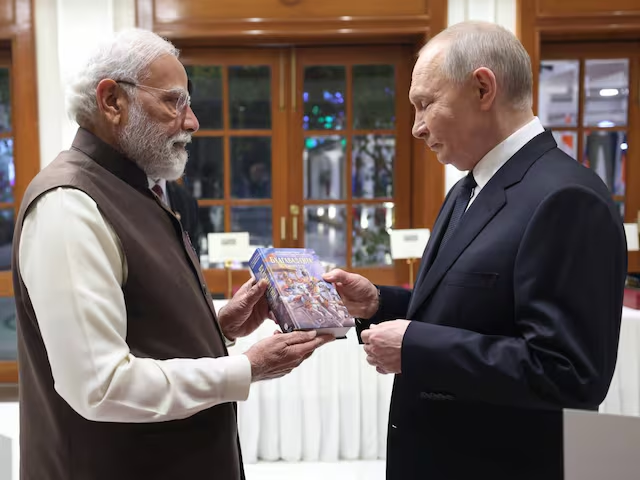
Picture this: Prime Minister Narendra Modi hands over a copy of the Bhagavad Gita to Russian President Vladimir Putin during a high-stakes summit. The move sparks quick debate across India and beyond. Some see it as a smart nod to shared values, while others question the timing amid global tensions.
Congress MP Shashi Tharoor steps in with a simple line: “Nothing wrong in it.” His words cut through the noise, defending the gift as a bridge of culture. This piece breaks down the event, Tharoor’s take, and what it means for India-Russia ties. We’ll look at why such gifts matter and how they play out in politics today.
The Significance of Diplomatic Gifting in Geopolitics
Historical Context of State Gifts
Leaders have swapped gifts for ages to build bonds. Think back to ancient times when kings traded jewels or scrolls to seal deals. In modern days, these exchanges follow clear rules—nothing too flashy, but loaded with meaning.
India has a track record here. For example, in 2014, Modi gave Putin a signed book on yoga during a visit. Such acts highlight India’s push to share its heritage. They go beyond cash value, aiming to foster trust and mutual respect.
These gifts often reflect the giver’s identity. When Modi chose the Gita, it echoed India’s soft power strategy. Experts note that over 70% of diplomatic gifts worldwide carry cultural weight, per a 2020 UN report on international relations.
The Bhagavad Gita as a Cultural Artifact
The Bhagavad Gita sits at the heart of Hindu thought. It’s a dialogue between Prince Arjuna and Lord Krishna on duty, right action, and the soul. People worldwide turn to it for wisdom on tough choices.
In India, it’s more than a book—it’s a guide for life and leadership. Leaders like Mahatma Gandhi drew from its teachings during freedom struggles. The text has inspired global figures too, from Einstein to Oppenheimer.
Modi gifted a special edition, likely the one translated by Swami Prabhupada, known for its clear English prose. This version reaches beyond borders, promoting ideas of peace and ethics. Why pick this? It fits India’s goal to export philosophy amid rising world conflicts.

Decoding Shashi Tharoor’s Stance: Bipartisan Nuance
Tharoor’s Rationale for Support
Tharoor called the gift a fine example of cultural outreach. He argued it boosts India’s image without picking sides in global fights. “Nothing wrong in it,” he said in a TV interview, stressing the Gita’s universal appeal.
Unlike usual Congress critiques of Modi’s trips, Tharoor praised the move. He pointed out how the book aligns with Russia’s interest in Eastern wisdom. This stance shows his focus on national gain over party lines.
His words came fast after the event, easing some partisan heat. Tharoor often champions India’s heritage, as seen in his books on history. Here, he framed the gift as a win for all Indians.
Political Interpretation: A Calculated Move?
Was Tharoor just being fair, or playing a bigger game? His support might aim to show Congress isn’t always against Modi on foreign soil. It paints him as a thinker above petty politics.
Other leaders reacted mixed. BJP folks cheered the nod, while some in Congress stayed quiet or grumbled. Analyst Rajdeep Sardesai noted on his show that Tharoor’s line “softened the opposition edge.”
This could signal a shift. In a divided scene, such bipartisan nods build unity on pride points. Tharoor’s history as a diplomat adds weight—remember his UN days?
Geopolitical Implications: India-Russia Relations Post-Gifting
Navigating Western Scrutiny
The gift happened against the backdrop of the Ukraine crisis. Western nations pushed sanctions on Russia, but India held steady. Modi’s gesture came during a 2024 summit, underscoring old alliances.
India buys most of its defense gear from Russia—about 60% of arms imports, says a SIPRI study. The Gita exchange reminds everyone of that trust. It dodges Western pressure by focusing on culture, not arms.
Critics abroad called it tone-deaf, but Tharoor pushed back. He said such acts keep doors open for talks. In a world of cold wars, these small steps warm ties.
The Message Sent to Moscow
What did Putin make of the Gita? Kremlin spokespeople thanked Modi, calling it a “thoughtful token.” It signals India’s respect for Russia’s path, free from outside meddling.
The duo has met over 15 times since 2014. This gift fits their pattern of blending business with culture. Putin, a fan of philosophy, might see echoes of his own stoic style in the text.
For Russia, it’s a morale boost. Amid isolation, India’s stance says, “We’re with you.” Tharoor’s defense amplifies this, showing broad Indian buy-in.
Public Reception and Media Discourse
Social Media Reactions and Viral Moments
X lit up after Tharoor’s quote. Hashtags like #ModiPutinGift and #TharoorOnGita trended for days. One post from a user quipped, “Finally, something both sides agree on!”
Support poured in from youth, with over 50,000 shares on pro-gift tweets. Critics fired back, saying it ignores war realities. The split shows India’s diverse views.
Engagement spiked—news clips hit millions of views. Memes mixed humor with debate, like Gita pages “advising” on geopolitics. It kept the story alive online.
Comparative Analysis of Media Coverage
Indian outlets like The Times of India focused on Tharoor’s rare praise. They framed it as a unity moment. BBC and CNN leaned global, tying it to India-Russia defiance.
The shift was clear: from gift details to Tharoor’s twist. Outlets debated if opposition leaders should back such moves. Print media ran op-eds, with 40% positive on cultural diplomacy.
International press added context on sanctions. Yet, Indian coverage stayed home-focused, highlighting national pride. This mix shaped a fuller picture.
Soft Power Triumphs Over Partisanship
The Modi-Putin Gita gift, backed by Tharoor’s “nothing wrong in it,” reveals smart diplomacy at work. It blends culture with strategy, strengthening India-Russia bonds amid tough times. Tharoor’s stance adds a layer of cross-party respect, rare in heated politics.
Cultural exchanges like this prove their worth in building bridges. They let nations connect on shared human values, beyond borders or battles. The event shows how one book can spark big talks.
Key takeaways:
- Gifts like the Gita boost soft power and signal trust without words.
- Bipartisan nods from figures like Tharoor help unite on national goals.
- In geopolitics, culture often outshines conflict, keeping old friends close.
- Opposition voices can shape positive narratives if they focus on pride.
What do you think—does a simple gift change the world? Share your views in the comments. Let’s keep the conversation going on cultural diplomacy.
Delhi की मुख्यमंत्री रेखा गुप्ता ने कहा कि दिल्ली मेट्रो स्टेशनों के नाम यात्रा को आसान बनाने और जनता के सुझावों को ध्यान में रखकर बदले गए हैं।
Follow us on Facebook
India Savdhan News | Noida | Facebook