


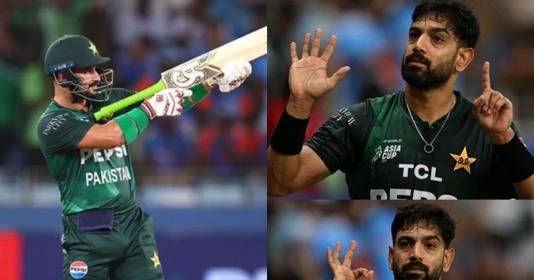
Cricketer or Terrorist? Pakistan’s Harris Rauf Made ‘6-0’ Gesture, Sahibzada Farhan Made Gun Sign in Front of Indian Crowd
Cricket matches between India and Pakistan often feel like more than just a game. They turn into battles where emotions run high, and one wrong move can spark outrage. So, when Pakistani players like Harris Rauf and Sahibzada Farhan make bold gestures, fans ask: are these cricketers or something else? The phrase “cricketer or terrorist” has popped up online, questioning if they’re tarnishing the spirit of sport with actions that echo deeper tensions.
In a recent clash, Harris Rauf flashed a “6-0” sign after a key moment. Sahibzada Farhan went further, mimicking a gun toward the Indian crowd. These clips spread like wildfire on social media. People couldn’t stop sharing them, turning a simple match into a global debate.
Such incidents hit hard because cricket bridges cultures, yet politics often creeps in. They affect how the world sees the game and the ties between nations. Let’s dive into what happened, why it matters, and what it means for the future.
Detailed Account of the Incident
The backdrop was a heated India-Pakistan encounter in a major tournament. Tensions were already thick, with fans from both sides cheering loudly. Eyewitnesses say the gestures came right after intense plays, caught on camera for all to see. Videos from the stadium and fan phones quickly hit platforms like YouTube and Twitter, fueling the fire.

Harris Rauf’s ‘6-0’ Gesture: What Did It Mean?
Harris Rauf, the fast bowler, made the “6-0” sign during celebrations. He held up six fingers on one hand and zero on the other. Many saw it as a nod to Pakistan’s claims of winning wars against India, like in 1965 or 1971—though history says otherwise. Indian fans booed instantly, feeling mocked.
The crowd erupted in anger. Some called it unsportsmanlike. Officials noted it but no immediate action came. Rauf later shrugged it off in interviews, but the damage was done. Searches for “Harris Rauf 6-0 gesture” spiked, showing how fast controversy spreads.
Experts point out this ties into old rivalries. It wasn’t just a random move; it felt pointed, especially in front of a mixed audience.
Sahibzada Farhan’s Gun Gesture: Provocation in Front of the Crowd
Sahibzada Farhan, the opener, did his gesture after a boundary. He pointed his fingers like a pistol at the Indian supporters section. The crowd there, mostly from India, went silent then roared in protest. It looked like a threat, and links to terrorism came quick—given past events between the countries.
Reactions poured in right away. Indian media blasted it as reckless. The BCCI voiced concerns, urging ICC review. Farhan claimed it was just fun, but to many, it crossed a line. Terms like “Sahibzada Farhan gun gesture” trended, with fans sharing side-by-side clips of similar past provocations.
This happened post-match, adding to the chaos. Security had to step in as tempers flared. It raised questions about player control in high-stakes games.
Viral Impact on Social Media
Once online, these moments exploded. Twitter threads debated endlessly, with videos racking up millions of views. Instagram reels edited them into memes, mixing humor with fury.
Hashtags like #HarrisRaufGesture and #FarhanGunSign climbed charts. Fans from India shared outrage, while some in Pakistan defended it as passion. The buzz lasted days, pulling in celebrities and even politicians.
This shows how social media amplifies cricket drama. What starts in a stadium ends up shaping opinions worldwide.
Historical Context of the Controversy
India-Pakistan cricket has a long history of edge-of-seat matches. But controversies often steal the show, linking sport to bigger issues. This latest event fits a pattern, where gestures echo years of strain. Keywords like “India Pakistan cricket controversy” capture the ongoing saga.
Tradition of Provocation in India-Pakistan Cricket
Back in the 2000s, players like Shoaib Akhtar trash-talked openly. Shahid Afridi once bit a ball in anger during a match here. These acts fed into the rivalry, turning games into spectacles.
Over time, such moves grew bolder. They mirror political spats, like border disputes. Fans love the fire, but it often leads to bans or fines.
Recent years saw more, with celebrations getting heated. This “6-0” and gun sign just add to the list.
Impact of Terrorism Allegations on Cricket
Tragedies like the 26/11 attacks or Pulwama blast cast shadows. Pakistani players faced boycotts, with questions about their nation’s role. Former Indian cricketer Sunil Gavaskar once said such gestures reopen old wounds.
Experts like Ramiz Raja from Pakistan urged calm, noting it hurts the game’s image. These links make every action scrutinized.
The controversy tests cricket’s role as a unifier.
Violation of ICC Rules?
ICC’s Code of Conduct bans provocative behavior. Section 2.1 covers actions that bring the game into disrepute. Past cases, like Afridi’s fine for ball tampering, show penalties are real—fines up to 100% of match fees or suspensions.
Here, both gestures could fall under that. ICC might investigate, as they did in 2019 for similar taunts. Players know the rules, yet emotions win sometimes.
Enforcement keeps evolving to protect the sport’s integrity.
Reactions and Impacts
The fallout spread wide. Indian fans fumed, Pakistanis split, and globals watched closely. It touched sports, diplomacy, and fan culture. Searches for “Pakistan cricketer controversy reaction” surged as news covered it nonstop.
Anger from Indian Fans and Media
Social media lit up with posts calling the players out. News channels ran panels debating “cricketer or terrorist.” One viral tweet got thousands of retweets, asking why ICC stays quiet.
Fans boycotted Pakistan matches online. It felt personal, stirring national pride. Media like Times of India highlighted the gestures frame by frame.
This wave pushed for stricter oversight.
Defense from the Pakistani Side
Pakistani officials called it harmless excitement. Rauf said in a presser it was just a team joke. Farhan echoed that, saying crowds egg it on.
PCB backed them, focusing on the win. Some fans saw it as standing tall against rivals. But not all agreed—local voices criticized it too.
This split shows how views differ across borders.
Global Reaction and Expert Opinions
International outlets like BBC covered it neutrally, noting rivalry roots. Ex-cricketer Sunil Gavaskar slammed it as immature. Imran Khan, a former Pakistan captain, once advised keeping politics out—his old words rang true here.
Experts worry it scares sponsors. Cricket’s clean image takes a hit, pushing for better training. The world sees it as a symptom of unresolved issues.
Lessons for the Future and Suggestions
These events teach us to handle passion wisely. Players, boards, and fans all play a part in keeping cricket pure. Moving forward means learning from slips.
Tips for Players on Conduct
Stick to simple celebrations, like fist pumps. Avoid signs that could misread. Follow ICC guidelines—train on body language before big games.
Think twice in rival matches. Neutral vibes build respect. Many pros swear by this for long careers.
Role of Cricket Boards
BCCI and PCB should run joint workshops on rivalry management. Pre-match briefings can set tones. Shared rules prevent escalations.
They could launch campaigns for sportsmanship. Unity efforts, like exchange programs, help too.
Responsible Support from Fans
Don’t spread unverified clips—fact-check first. Cheer your team without hate. Use social media to promote fair play.
Join forums for positive talks. It makes watching fun for all.
Harris Rauf’s “6-0” gesture and Sahibzada Farhan’s gun sign turned a thrilling match into a storm. They sparked the “cricketer or terrorist” debate, highlighting how cricket mirrors deeper divides. From historical rivalries to ICC rules, it all shows the need for caution.
Key takeaways: Keep the game above politics. Learn from controversies to foster unity. What do you think—share your views in the comments for a peaceful chat. Let’s celebrate cricket’s joy, not its fights.
Prashant किशोर ने अमित शाह-नीतीश मुलाकात पर एनडीए नेताओं, तेजस्वी यादव की आलोचना की
Follow us on Facebook
India Savdhan News | Noida | Facebook